

Update: See my AI manifesto.
It’s weird to be gushing over AI while everyone* else seems to hate it…
( * everyone in the West only, apparently: https://restofworld.org/2026/west-ai-anxiety-optimism-innovation/ . Seriously I think rich people lack imagination.**)
( ** Claude pushed back, reminding me again of the centering effect of AI – some highlights below)
This comic sauntered over my feed the other day: Dear boss/client, stop anyhowly asking me to use AI in my work. One frame (which oddly I didn’t see in the online version) is particularly funny:
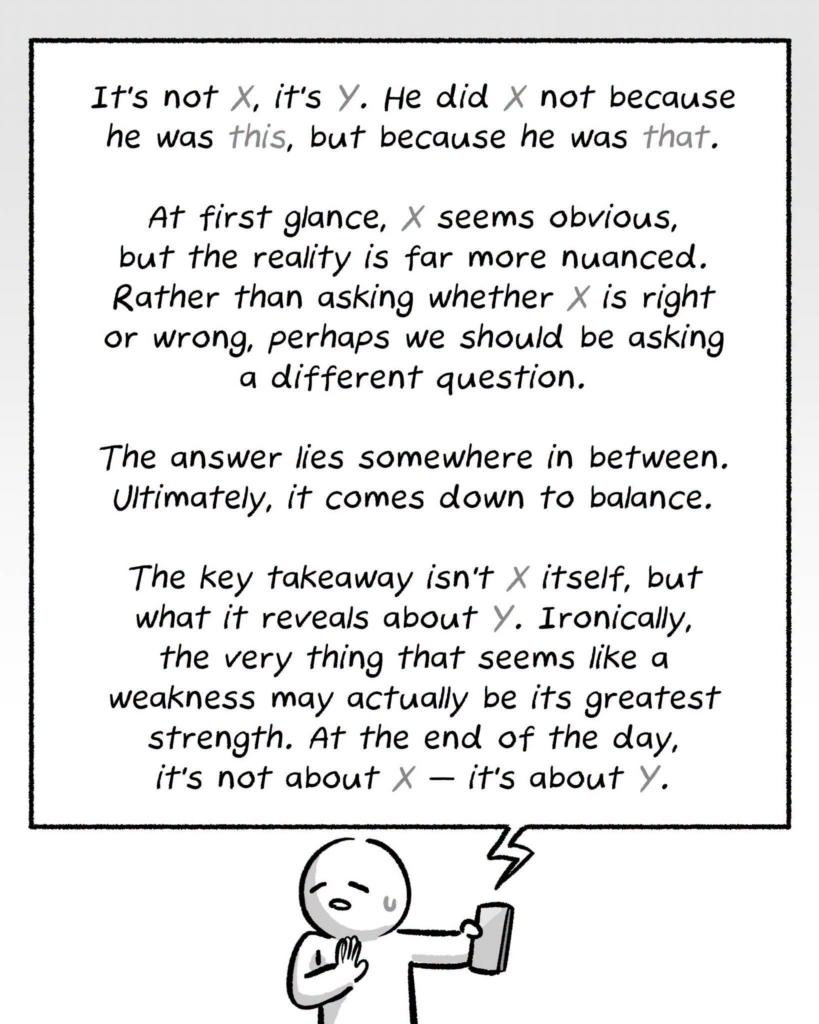
The comments added a few gems, and I’d like to add the overuse of the word “genuinely”.
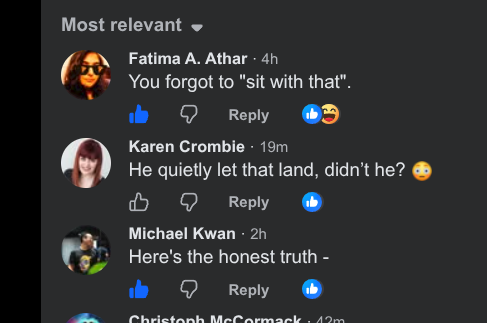
I get it.
But I do feel like people don’t get these concepts I’m working with, the connections I’m trying to make. The worldviews I’m trying to bridge. This was a last resort, and it’s working for me.
And maybe that makes me sound like an incel or a teenager, boohoohoo nobody gets me.
But consider the last few posts I made, ideas that has been stuck for years. I have asked and spoken with many people, in many contexts, and got nowhere. Those ideas made it into prototypes through the help of Claude. It helps me get articles in a new research field, that I wouldn’t even know what to look for otherwise: I don’t have the phrases, I don’t know the jargon.
I know this is a slippery slope, and particularly the more therapy-stuff, like the wobbly post, yeah, it’s affirming and it’s tedious to read and I didn’t craft it into a polished idea, that wasn’t the point of the post. But it helped me think through things and process my feelings.
Claude is my thinking partner, with several annoying speech habits and (mansplaining?) quirks. Like any other thinking partner, their work doesn’t make it into the final writing, the final work and responsibility and accountability rests on me, the author.
I felt myself getting defensive while watching (cough, doomscrolling) a video with a bunch of people talking about the dangers of AI. I don’t think people particularly want to prefer AI, it’s just that humans are … consistently disappointing. However, when the panel spoke about that the target audience is between 13 and 17, that stopped me in my tracks.
I get super annoyed at the developmentally stunted coder bros. I think a large part of why they’re like that, is that they had computers they could hide behind when they were young, and they could generate income from this computer work, safely hidden away: they didn’t have to learn how to deal with people. I started out awkward but realised to get what I want, I would have to learn how to deal with people. So I went to live in the teaching students residences and learnt how to party, lol. Hey, but it worked. There’s a world of difference having cut your teeth and learnt the ropes and tried the things and then choose to use AI and take the responsibility for it (choice is important and the woke salaryman comic is in large part griping because AI gets thrust on him) , and just using it to dodge the whole developmental process altogether. It’s like getting unrestricted access to drugs at a vulnerable age or stage of your life.
I don’t think we can restrict access effectively. That’s unenforceable. I think the way around it is the same way we deal with misinformation and getting people out of cults – inoculate them and build community through curiosity, but maybe that’s just me, on my curiosity mission.
So yeah, I take the AI concerns to heart. I choose to use Claude, and I understand it’s risky business.
Pushing back on scoffing over privileged “pessimism as a cultural virtue”
That phrase “pessimism as a cultural virtue” comes directly from the article by Payal Arora “What the West can learn from AI optimists in the rest of the world”. I loved the phrase, and took issue that this “pessimism as a cultural virtue” is counter to the curiosity I’m trying to cultivate, and it’s not a great communication as method approach. Payal’s point was that that scarcity pushes builders to ask “what problem does this solve?”, rather than worry too much about the risks. I liked that the people with the least access often have the best questions, and then said, I think privileged people lack imagination.
Claude pushed back. It said, privilege doesn’t remove imagination, but it does remove the need to use it. If the existing system works for you, you rarely have to picture an alternative, so the muscle goes unused. People with less access are often forced to imagine workarounds, and they know where the system fails because they’ve hit its edges. That’s an advantage in what they notice, but scarcity has its own limits. If you’re surviving day to day, there’s no room for the exploratory kind of curiosity either. That connects to your holding-environment idea. Curiosity seems to need a middle zone: enough security that exploring is safe, and enough friction that it matters. Too much comfort breeds complacency or fear of losing it, which may be part of why pessimism becomes a virtue. Too little safety leaves no energy to explore.
I thought that was a profound observation, but I still felt that privileged people get domesticated like cows; that they simply don’t have what it takes anymore. They’ve lost the ability to think. And damn Claude pushed back again.
Claude said: Most people in the West think perfectly well. The same societies produced a lot of dissent, science and radical ideas, and plenty of people elsewhere are just as conformist and incurious when the conditions push them that way. Wealth doesn’t switch off thinking, and neither does poverty make people wise. It did concede that comfort and institutions can train people into compliance. When systems work well enough, people learn to wait for permission, outsource judgement to experts and rules, and treat risk as something to avoid. Add a culture where pessimism sounds sophisticated and enthusiasm sounds naive, and curiosity gets socially penalised. That isn’t “the West can’t think”. It’s that some environments reward caution and fitting in over exploring, and the effect shows up in how groups communicate.
It then tied the observations back to my work around the holding environment: If the question is what conditions help people stay curious, then “domestication” may be a name for what happens when the holding structure rewards safety and conformity more than questions. That’s testable and doesn’t depend on judging whole continents.
The version Claude suggesed instead is “some environments, rich or poor, train curiosity out of people”.
And I had to sit and eat humble pie. I love how I can vent and then together we actually get useful stuff out. That doesn’t happen often at all with people and their defensiveness.