Carrying on from the Layered visualisation, I started playing with what a house level, or street level visualisation could look like. Some inspiration off the web:


Interfaces, Spaces Between
Carrying on from the Layered visualisation, I started playing with what a house level, or street level visualisation could look like. Some inspiration off the web:
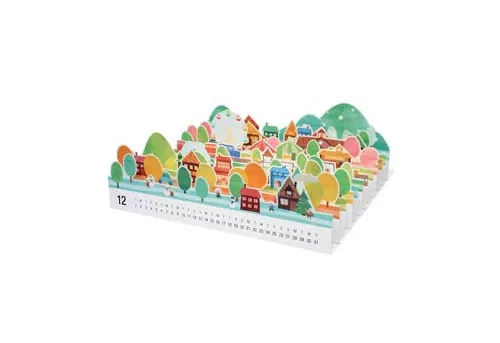
Inspired by Fil’s Layers Perspective, as well as this papercraft calendar. The idea is to be able to isolate some elements, and then see how they relate.
As part of thinking through the AquaSavvy tool visualisations, I revisited an idea from a loooong time ago (2018) that was part of the inspiration for AquaSavvy.
As an exercise, I’m not sure how this would make it into the AquaSavvy tool as is. I had to do a lot of wrangling with Claude, that I don’t think a layperson could or would want to do. It’s fine for the project to do this for our selected sites, but as a global tool meeting people where they are, I don’t know.
Continue reading “Cape Town sewage flows”Note: This is part of the active AquaSavvy project. We’re prototyping ideas for rending the data into the visualisation tool.
The conversation started with “How can we visualise our emotions and responses to water?”
Continue reading “AquaSavvy tool ideas: Emotion map”I applied to the MSCA again. Calculated success rate is about 7.4%, heh. But, the process, as always, was so incredibly insightful and I am already applying the principles in my work and thinking. So, win.
TL;DR: AquaCurious: Cultivating Curiosity-Driven, Gameful Coalition Culture for Sustained Civic-Led Water Partnerships
I ask how six structural elements – process, place, people, power, purpose, and care – let civic actors build and sustain coalition-based water governance. Curiosity as the design mechanism is mobilised through gameful approaches, applied through the vehicle of designing a pocket park in Tampere.
Continue reading “AquaCurious”More playing with Claude. The idea is to create a “home” to play and build on, ala sim game (ideally, Godus like) that is based on topography of the physical world.
The pipeline now goes: draw a box over your chosen area – the starting point at the moment is São Miguel island, Azores → fetch real elevation → click a contour ring to set the coastline (doesn’t have to be the actual coastline… rediscover Atlantis 🙂 ) → carve.
An important point is the idea is to be inspired by physical reality, not tied to it. Part of this is the “sculpted, not surveyed” nature of the renders, so it sometimes has artefacts. That’s intentional.
It’s still very buggy, of course, but check it out!
Continue reading “Build your own floating island”The idea is to have stuff happen in the three.js scene – like rain falling when you click the cloud, and then that updating in the Sankey diagram below that (see the mm increasing). It’s not much yet and meaningless at this point, Sao Miguel is also “sculpted not surveyed” which is an interesting approach I may explore more intentionally, but it’s not bad for about 2 hours of playing over the weekend. Damn, AI is scary.
Backstory: I bought my first physical Etsy thing! (previously only digital files for papercraft): the Miniature Tiny House made by Turkish company Terrarium Stories. The seller and I started chatting (because I am now also intrigued by Turkey) and I asked if they have considered making the Klein A45, you know, the tiny house I am obsessed with. They said not yet, but they are taking a short trip to Denmark soon = The Bjarke Ingels Group, who designed the A45, is Danish. This conversation reminded me of when I got to see the A45 up close during a tiny house exhibition in Denmark in 2022.

I dreamt a lot last night, take that for eating roast duck just before bed!
Update: the song for this (not in the dream, but it captures the zeitgeist): Don’t Take the Money by the Bleachers:
Or, Education as an emergent game, where metagaming is core to play. I’m presenting this at the Virtual Worlds Best Practices in Education: Insights conference, happening online in SecondLife March 19-21, 2026. This is adapted from a piece submitted to the Virtual Education Journal which in turn led from a presentation at the Open Simulator Community Conference.
Continue reading “Emergent Education as Metaplay”