

The Open Simulator Community Conference is my first virtual conference!
OSCC2025 schedule: https://conference.opensimulator.org/schedule/
my talk: https://conference.opensimulator.org/events/metaculture-metagaming-integrated-knowledge-infrastructures/
Watch it on Youtube : www.youtube.com/AvaconOrg/
Join the conversation:
The conference Discord is at AvaCon
The conversation in OMI Discord (long term): Inclusive Communities Research
1. Introduction
1.1 Who am I?
My name is Bernelle Verster, and in the Metaverse I go by indiebio. indie for independent, as in indie rock, and bio as in biology. I am a biologist by training, then ended up in bioprocess engineering and urban resource management. So I am not a native to these parts as you can tell by the hippo avatar, and I live mainly in text and offline, so one could say I am in 1D, nevermind 3D! My interest in the Metaverse is the meta-part of it, rather than the visual or the virtual. It’s the interoperability of data, cultures, the physical with the digital, basically, everything.
1.2 Why am I here?
I volunteer a lot, it’s how I learn and make friends. I joined my local community groups looking after the natural areas enclosed in our urban areas, I organised events like our local parkrun and TEDxCapeTown, I organised conferences like the Debian Developer Conference. I was chair of a few things, and currently I am involved in the Open Metaverse Interoperability group, also known as OMI – we have a panel in about an hour and a half from now.
Through my work, both professional and volunteering, work and play, I became intrigued by the social dynamics of community-driven knowledge networks. I am particularly interested in intractable challenges, things that just do not have a solution. Because of my scientific background and interests, I am interested in politically charged scientific challenges, like climate change, the covid pandemic… how people believe things when our idea of the facts, as so-called experts, may indicate otherwise. So now I am focused on understanding that better, and improving how we deal with these challenges, together.
2. Background
“You already know enough. So do I. It is not knowledge we lack. What is missing is the courage to understand what we know and to draw conclusions.”
― Sven Lindqvist, “Exterminate All the Brutes”:
We have SO MUCH data, it’s a mess. It’s a mess on a whole lot of levels and the technical approach to that, integrating big data, or integrating knowledge infrastructures, is also an ongoing project that has a home in OMI, but it’s the interaction, or lack thereof, by everyday people, that I want to focus on here. Because of the bigness of this data and one could say the necessity of visualizing it, there is a digital, and likely an immersive component to it – the idea of the Metaverse that many people have.
Bid data has been a thing for a while, but I really hit the wall during an extreme drought, when we just weren’t moving the needle as so-called “experts”. Cape Town was two weeks away from a city of 4.5 million people running out of water. Right now, Iran, and Turkey, and other places, have run out of water.
Looking wider towards the global response and actions (or not) towards climate change, and the political climate, it is clear this is a much wider problem. We need people to act, from the bottom up, while staying accountable. I am not advocating for anarchy, or a revolution. I am working on a careful, community approach, balancing a feminist ethic of care with critical accountability, and pursuing responsive infrastructures at appropriate scales. Technically this is possible, and scaling it to spread across the globe is possible, especially through the Metaverse. I was stuck on the social side of things. We need to get people to care in the first place.
So I started reading and reading about what to do about it, and this is my attempt to act on what I have learnt so far.
3. The Need
Focus is always good, so the need, or applicability of this is specifically:
a – Volunteer/grassroots/activist communities are not as welcoming as we would like to think.
b – This is also linked to how to address misinformation across the internet at large, echo chambers, flame wars and The Algorithms.
We try to have conversations with people, and include people, but more often than not we end up fighting, being patronising, being uninspired, being “educational”, meaning we talk down at them and don’t allow their views to be shared. This ends up chasing people away rather than letting them in and growing the community.
Can thinking about it through a culture of play help? What would this mean?
(I am venturing into a new area so this presentation is really about asking for help to build my research. You do have permission to be patronising and educational to me 🙂 )
4. Cultivating Curiosity
The TL;DR of how to get people to care is curiosity.


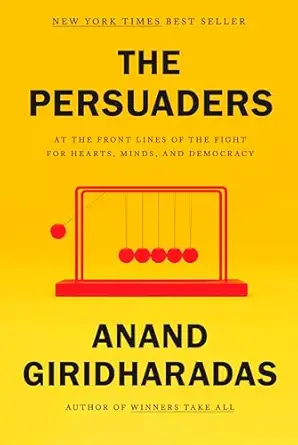
Reading work by Carol Gilligan on ending patriarchy, reading Naomi Klein on constructively engaging with misinformation, reading Anand Giridharadas on building connection across divisions, the one thing that kept coming up was cultivating curiosity.
The best quote about the importance of curiosity was penned by Tim Harford:
Scientifically literate people, remember, were more likely to be polarised in their answers to politically charged scientific questions. But scientifically curious people were not. Curiosity brought people together in a way that mere facts did not.
I recently found another blog referencing Tim’s, called “Misinformation May Be the Disease, But Curiosity Is the Cure” which says when people get into the “wiki zone” of production: it changes you. He explains this zone as “the nature of wiki, and particularly the idea that your job is to summarize the consensus of a community of experts. You’re not writing for yourself in wiki: you’re writing to represent others.”
The author shares an experience: “When I came across the article, I was delighted, because it added complexity to the article I was working on. It was surprising. It would allow my wiki article to tell a more interesting story, even if it undermined what I had thought up to now.” This is the “complicate the narrative” angle that I think comes from Carol Gilligan, and I found a short youtube that explains this too, which I can’t find again now. Have this link instead.
In the context of misinformation, leaving cults, learning … also now for AI. It’s about playfully introducing cognitive dissonance. Effectively training people to follow the scientific method of inquiry, being questioning, without being judgemental.
The academic research that Tim Harford was writing about was done by Kahan’s group. This is all good and well, but how do we scale this to reach more people? I plan to apply Kahan’s work through a method called deep canvassing (developed by Broockman and Kalla), adapted to be digital, and self-guided, and using knowledge infrastructures to apply a scientific context. That’s the methodology in a nutshell, but I don’t really know what I’m doing yet. Help!
5. Metagaming / emergent games – curious beyond the game.
In traditional role-playing games, metagaming refers to the use of real-world information that the played player character should not know about. A metagame can also refer to achievement systems and other official elements outside the actual core game. While the use of the term varies by context, the different meanings have in common a reference to something beyond the game itself. Considering OpenSimulator as the game, OSCC is then an example of a metagame. While I understand there are different definitions, judgements and ideas around metagaming, I first came across it through an article by Juho Kahila’s group, where they investigated how school learners engaged with games for educational purposes.
In their article “A Typology of Metagamers: Identifying Player Types Based on Beyond the Game Activities”, Kahila’s group looks at what happens beyond the game. They talk about three distinct profiles of players: versatile metagamers, strategizers, and casual metagamers, and maps their metagame activities into the main categories of game-enabling activities, strategizing activities, discussing activities, information-seeking activities, creating and sharing activities, and consuming activities. Table 1 in their article summarises this well.
6. Convergence culture: From broadcast to communication
The metagaming idea also links strongly to Henry Jenkins’ convergence culture. The central idea is that the [media] ecology is transforming from targeting passive audiences receiving broadcasted information, into including active participants in the [entertainment] experience. Jenkins talks about changing from broadcast to communication.
This convergence culture lead to User-Generated Content (UGC) and related things that I think we can all agree is a good thing, but it also lead to changing who we believe, and to a large extent the transformation of expertise. Misinformation – which is one part of why I hit the wall during that extreme drought. When I was trying to figure out how to make people believe “the truth” (or my truth, as an expert) and learn about why people believe things when our idea of the facts, as so-called experts, may indicate otherwise, I realised that maybe we as experts don’t really have it all figured out anyway – the other half of why I hit the wall, and, well, an existential crisis. We are working with outdated models in a rapidly changing world that is in crisis. So we need to start over. We need to look at the granular facts, the tiny bits of information, and build a common understanding for what is appropriate for us at our local levels, together. And I was really stuck on how to do that, not just from a social science, or psychological perspective (the curiosity stuff), but also the tools that are available is completely inadequate. There are sparks of light out there, of course. They’re not perfect, but things like Wikipedia, OpenStreetMaps, and even how Linux and open source software is built can teach us a lot about how to generate and integrate information from the bottom up. I want more of that. And I want better than that.
7. Integrating knowledge infrastructures
“Knowledge infrastructures” mean all the stuff that collates data, or knowledge, or information. For me that is things like Wikipedia, OpenStreetMaps, but also EMODNet, DestinE, NOAA, and literally thousands of knowledge databases and whatever collections of data that is out there and in theory at least open and accessible. It also includes local data, in the same way that OpenStreetMaps work, but for water, or whatever people want. Ideally I would want something like OpenResourceMaps, that work at whatever scale is appropriate for people, thinking about privacy and resolution and whatever we need to consider when we work with resources that change and that can be vulnerable to security risks.
My dream with this is to integrate the physical world into games. Not for education, for fun. To cultivate curiosity. Tim has another good quote:
Thoughtful curiosity builds knowledge, and knowledge builds thoughtful curiosity.
Interoperability means of course that it can also be used for education, for serious stuff.
8. Putting it together: Metaculture
Putting the metagaming with the integrated knowledge culture gives a case study, a focus to work with. We are starting a project next year that aims to integrate this with water – AquaSavvy.eu. We are now working on a proposal to do this with biosphere reserves as well.
But it is also important because culture does not exist in a vacuum, you need a community. And meta-culture is about the culture that emerges when we cross those communities, when we move between them, when we can’t rely on the unspoken agreements that keeps a community together. How do we navigate that when the dominant language is not English, for example? When we don’t know what the basics are? We have been toying with this in the furry community, with avatars, and I have been learning so much from this community? How do we apply that to science? To expertise? That is what my project is about.
9. end slide: Call to Action
Please help!
- Academic references, potentially relevant research groups
- Activist groups, communities
- Funding?
get in touch: indiebio, blog: indiebio.co.za,
this conversation happens in the OMI Discord – forum post: (this one – add the link)
also interesting: aquasavvy.eu – A EU funded project applying this, starting in 2026.
2 Replies to “OSCC2025 talk: MetaCulture = Metagaming + Integrated knowledge infrastructures”